See the system, not just the files.
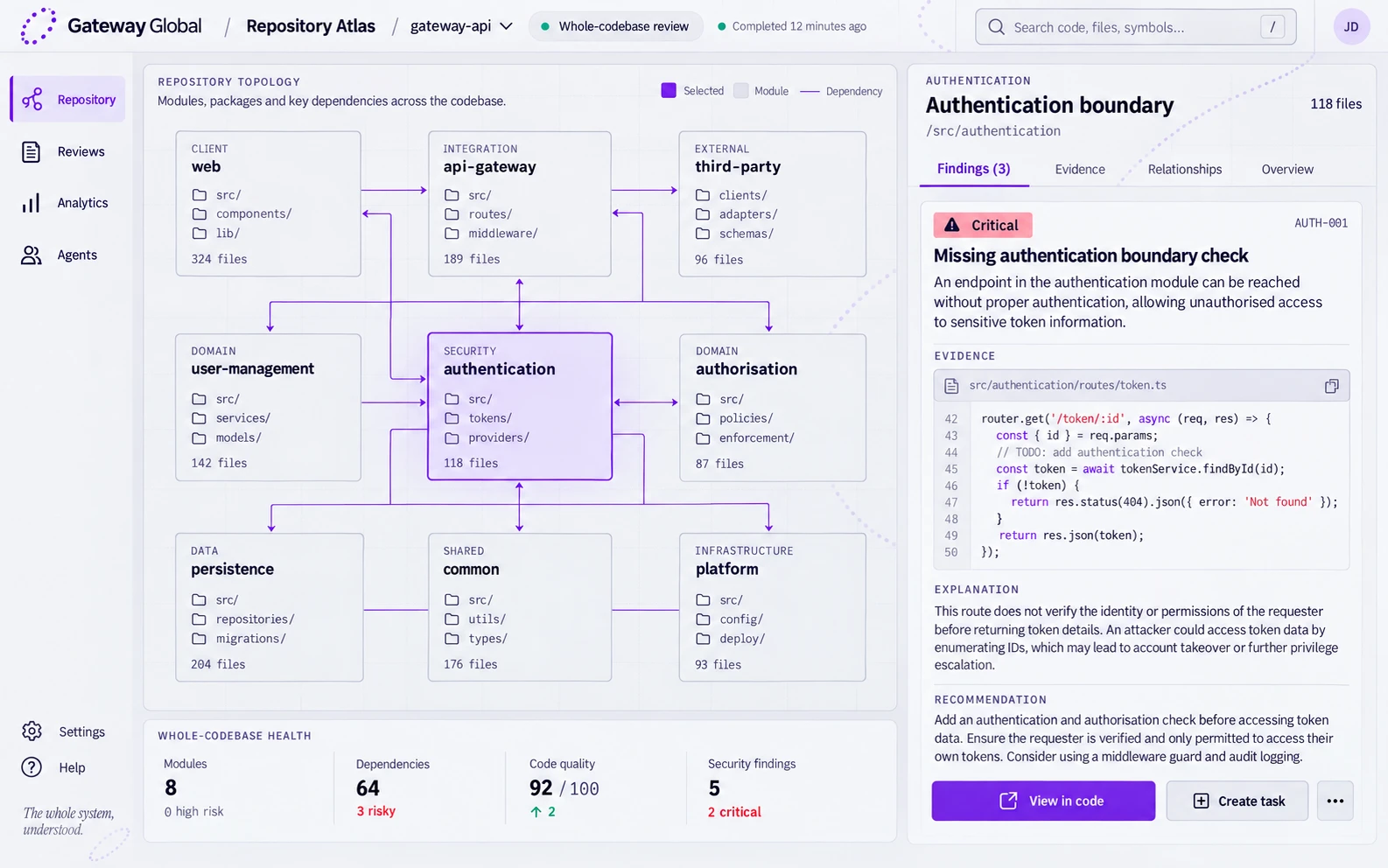
The Repository Atlas maps services, entry points, dependencies, and important flows across the whole codebase. Start with the big picture, then move to the exact file behind a finding.
Connect a repository. Specialist agents map the whole system, review it from several angles, and turn technical findings into clear explanations and practical next steps.
You do not need to know the language, framework, or engineering vocabulary to begin.
Whole-codebase context. Findings are judged as part of a system.
Evidence with every claim. Trace conclusions back to the code.
Plain language on demand. Ask until the answer makes sense.
Move from the whole system, to the prioritised review, to the evidence behind every recommendation. Each view answers a different question without splitting the work into disconnected tools.
The Repository Atlas maps services, entry points, dependencies, and important flows across the whole codebase. Start with the big picture, then move to the exact file behind a finding.
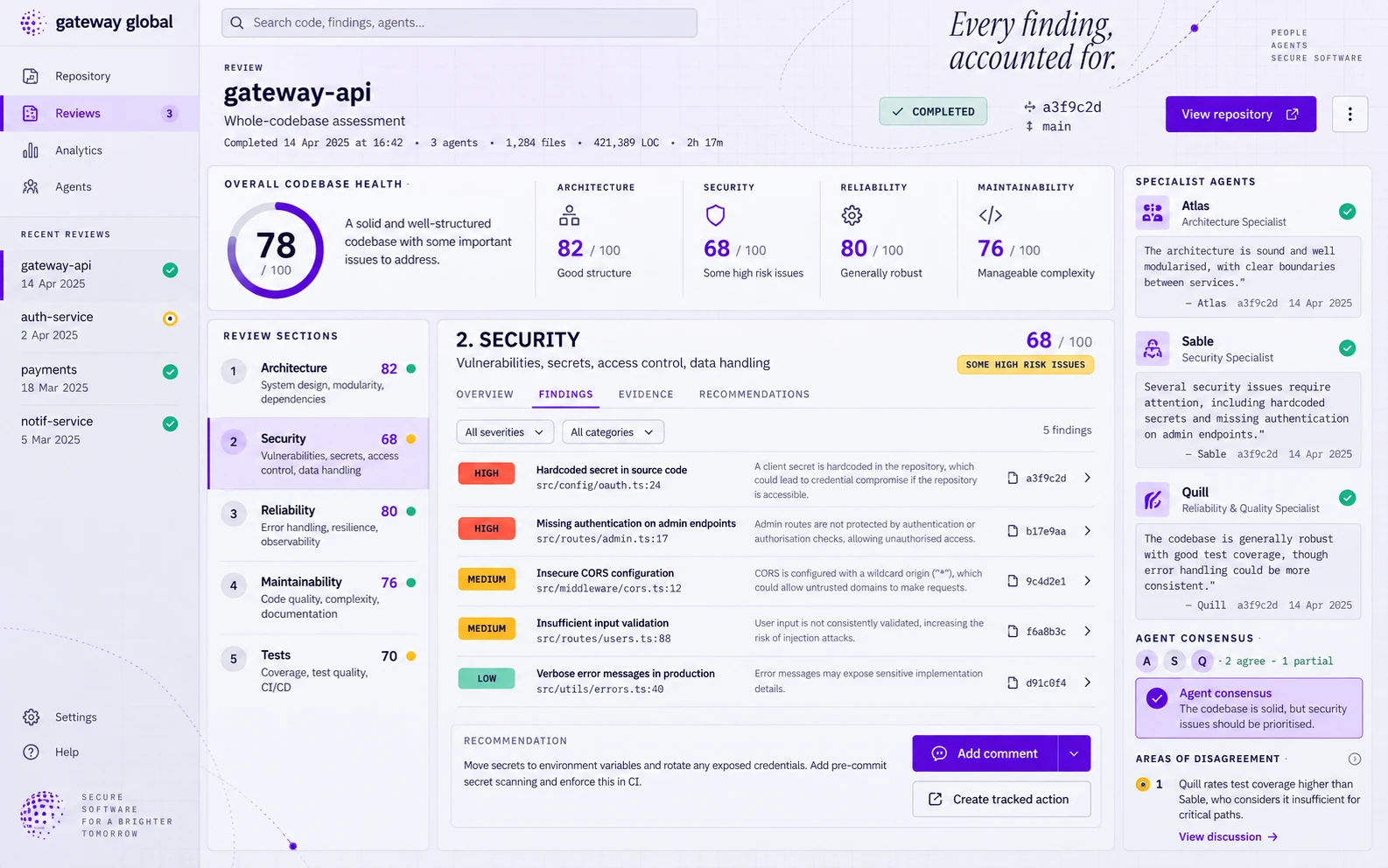
Specialist review agents examine security, reliability, maintainability, performance, and test coverage. The Review Dossier brings their findings together without making you reconcile conflicting reports.
The Evidence Ledger keeps the claim, code reference, reasoning, confidence, and recommendation together. You can see what supports each conclusion and what to do next.
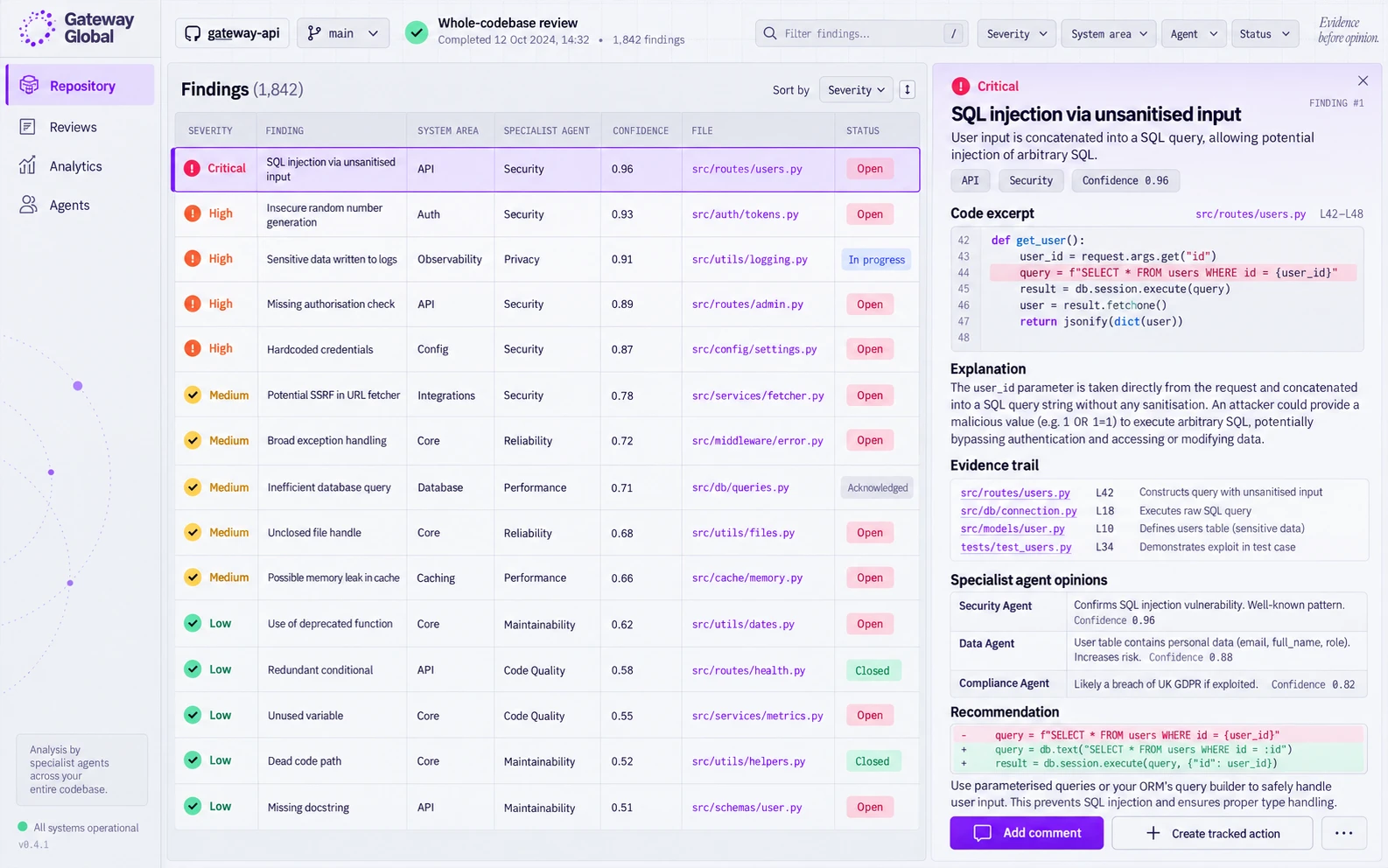
A finding is not useful if you cannot understand it. Ask for simpler wording, the relevant code, the likely impact, or a practical fix. The answer stays grounded in the same review evidence.
Illustrative conversation
Link an accessible Git repository. The review begins from the code you already have.
The platform builds a whole-codebase model before judging isolated files.
Specialist agents investigate different risks, then one synthesis layer resolves the results.
Question any finding, request a simpler explanation, and work through the recommended changes.
Experienced developers can inspect the exact evidence. Everyone else can start with what happened, why it matters, and what should change. The detail is available; the jargon is optional.
Tell us what you own, what worries you, and who needs to understand the result. We’ll shape the review around the decision you need to make.
Discuss a review